
The Salesforce Gemini pivot has officially sent shockwaves through Silicon Valley. In a move that surprises many, CEO Marc Benioff has publicly announced that his enterprise giant is moving away from OpenAI’s ChatGPT in favor of Google’s new Gemini 3 models.
This isn’t just a vendor swap; the Salesforce Gemini switch is a strategic indictment of the current state of Large Language Models (LLMs). Speaking at a tech summit in San Francisco, Benioff didn’t mince words: “We’ve been testing everything,” he said. “And right now, for enterprise reasoning, the gap between Gemini and GPT-4 is huge. We are switching.”
For developers and investors alike, this raises a critical question: Is the “First Mover Advantage” of OpenAI finally eroding?
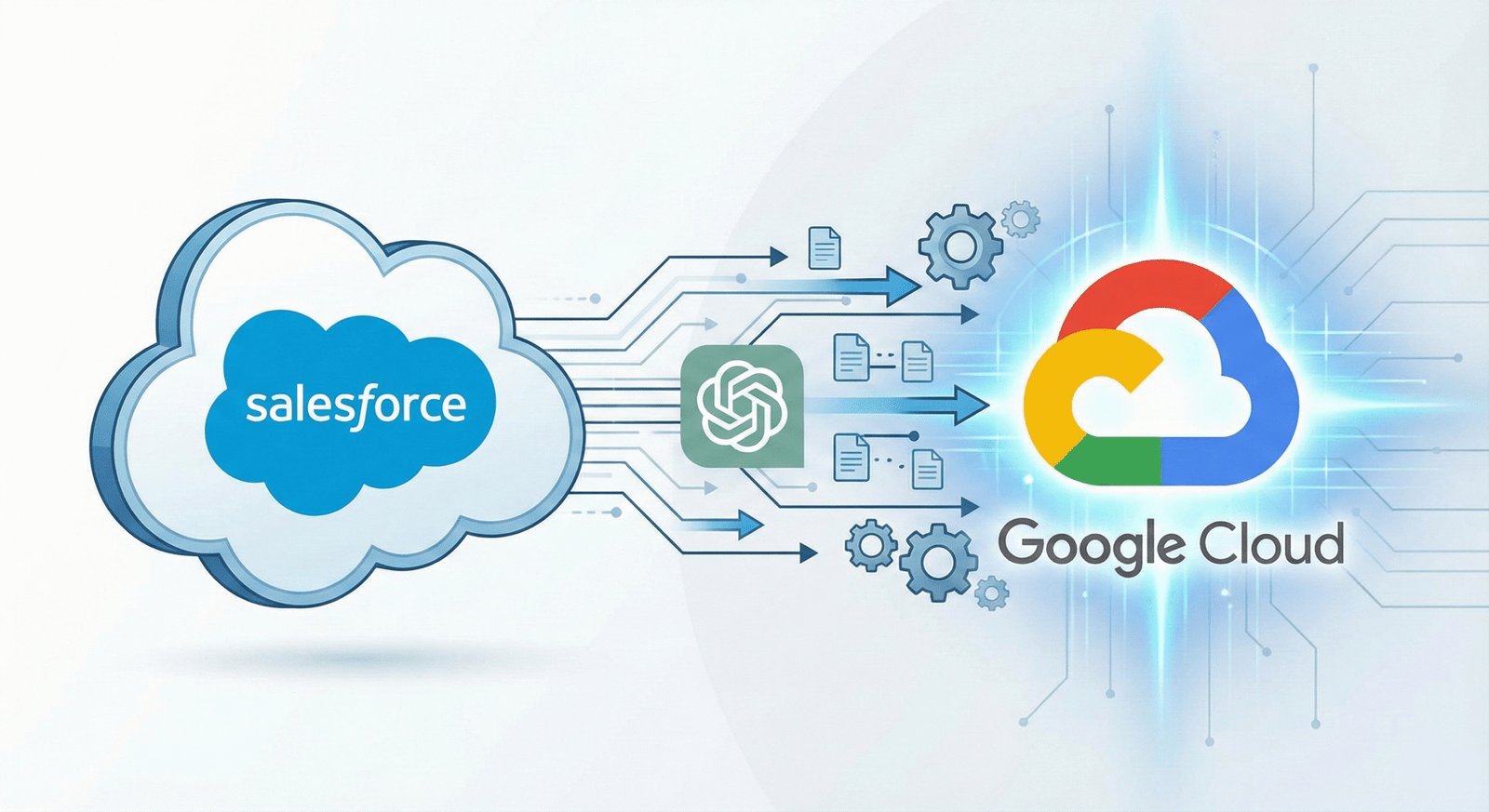
The Salesforce Gemini Breakup: Why They Left OpenAI
For the past two years, the Salesforce Gemini partnership seemed unlikely, as Salesforce was one of OpenAI’s closest enterprise allies. The integration of GPT-4 into Salesforce’s “Einstein” platform was heralded as the future of Customer Relationship Management (CRM). So why the sudden breakup?
According to internal reports and Benioff’s public comments, the decision driving the Salesforce Gemini transition wasn’t political—it was purely technical. The limitations of GPT-4o began to create bottlenecks for Salesforce’s massive data requirements.
1. The “Lazy AI” Phenomenon
Echoing complaints from developers on GitHub and Reddit, Benioff noted that ChatGPT has become “lazy” in recent updates. For casual users, this might mean shorter answers. But for an enterprise running millions of automated queries a day, “laziness” means failure to execute complex instructions.
When an AI agent is tasked with analyzing a 50-page sales contract and extracting specific liability clauses, it cannot afford to “summarize” or skip details. Salesforce found that GPT-4o was increasingly hallucinating or truncating data to save compute, whereas the Salesforce Gemini integration maintained high-fidelity reasoning throughout the task.
2. The Hallucination Rate
Trust is the currency of enterprise software. If a chatbot gives a wrong answer to a teenager, it’s funny. If it gives a wrong financial forecast to a CFO, it’s a lawsuit.
Google claims—and Salesforce apparently verified—that Gemini 3 has a 40% lower hallucination rate than GPT-4o on “long-tail” enterprise tasks. This reduction in error rate is the difference between a “Prototype” and a “Production” product.
The Killer Feature: The Battle of Context Windows
If you look under the hood of the Salesforce Gemini deal, the real reason for the switch is likely Context Window size. This is where Google has quietly built an insurmountable lead.
- GPT-4o / GPT-5 Context: ~128k – 400k tokens.
- Gemini 1.5 Pro / 3.0: 2 Million+ tokens (approx. 1.5 million pages, hours of video, or massive codebases).
Why this matters for Salesforce:
Salesforce holds the “source of truth” for companies—every email, transaction, slack message, and contract. To answer a question like “Why did we lose the Acme Corp deal in 2023?”, the AI needs to read thousands of documents simultaneously.
With OpenAI, developers have to use “RAG” (Retrieval Augmented Generation)—chopping data into tiny chunks and feeding them to the model one by one. It is complex, slow, and prone to error. With the new Salesforce Gemini capabilities, they can simply dump the entire customer history into the prompt. The model sees everything at once. That isn’t just an upgrade; it’s a paradigm shift in how we build software.
What is “Agentforce”? The New Strategy
To understand the switch, you have to understand what Benioff is building. Salesforce recently launched “Agentforce,” a platform designed to deploy autonomous AI agents.
Unlike old chatbots that followed a script (“Press 1 for Sales”), Agentforce agents are designed to be autonomous employees. They have permission to:
- Read emails.
- Update databases.
- Refund customers.
- Schedule meetings.
For an agent to act autonomously, it needs Reasoning capabilities, not just text generation. Benioff’s bet is that powering Agentforce with the Salesforce Gemini engine is fundamentally better at “Multi-Step Reasoning”—planning a sequence of actions without getting confused halfway through.
Google Cloud’s Enterprise Comeback
This story is also a massive win for Google Cloud (GCP). For years, Microsoft Azure (backed by OpenAI) seemed unbeatable in the AI space. But Google has been playing the long game.
By integrating Gemini directly into Vertex AI, Google has created a frictionless ecosystem for developers. You don’t need to manage API keys or worry about data privacy the same way you do with third-party wrappers. The Salesforce Gemini alliance signals to other Fortune 500 companies that GCP might be the superior platform for “Serious AI.”
Developer Analysis: Is the Tide Turning?
As a developer building agents daily, I am seeing this shift in my own work. While OpenAI still dominates the “Consumer” mindshare (the ChatGPT app is unbeatable), Google is quietly winning the “Engineering” war.
We saw a similar shift with Apple earlier this year, where they integrated on-device models that prioritize privacy and accuracy over “creative writing.” When companies need reliability, they are increasingly choosing the Salesforce Gemini route.
The Code Factor: Even in coding benchmarks (HumanEval), models like Gemini and Claude 3.5 Sonnet are now consistently outperforming GPT-4o. Even with the release of GPT-5 (Orion) in August, many developers are finding that Gemini’s massive context window is more useful for real-world applications than raw reasoning power alone.
Verdict: A Warning Shot for OpenAI
Salesforce isn’t just a customer; they are a bellwether for the entire SaaS industry. If Marc Benioff—one of the most connected men in tech—thinks ChatGPT isn’t good enough for business, other CEOs will listen.
The pressure is now on Sam Altman. The “Good Enough” era of AI is over. Enterprises demand perfection, privacy, and massive context windows. Right now, the Salesforce Gemini data suggests Google has the better specs. The ball is in OpenAI’s court.
Frequently Asked Questions (FAQ)
Did Salesforce stop using ChatGPT entirely?
While they haven’t banned it, CEO Marc Benioff confirmed they are shifting their primary enterprise focus to the Salesforce Gemini integration for high-value tasks, effectively demoting ChatGPT to a secondary role.
Is Gemini better than GPT-5 for business?
Even with the recent release of GPT-5 (and 5.1), Google’s Gemini 3 still holds a massive advantage in Context Window. Gemini can process 2 million+ tokens (thousands of documents) at once, whereas GPT-5 tops out at around 400k, making Gemini superior for analyzing massive enterprise databases.
What is Salesforce Agentforce?
Agentforce is Salesforce’s new platform for building autonomous AI agents. Unlike chatbots, these agents can perform actions (like processing refunds or updating records) without human intervention, requiring highly reliable AI models.
Why does context window matter for CRM?
CRMs store massive amounts of unstructured data (emails, call logs). A large context window allows the AI to “read” the entire history of a customer relationship instantly, providing answers that are accurate and deeply personalized.
Is GPT-5 already out?
Yes, OpenAI released GPT-5 in August 2025 and the updated GPT-5.1 in November. However, Salesforce’s switch indicates that for specific industrial use cases, Google’s infrastructure and pricing may currently have the edge.