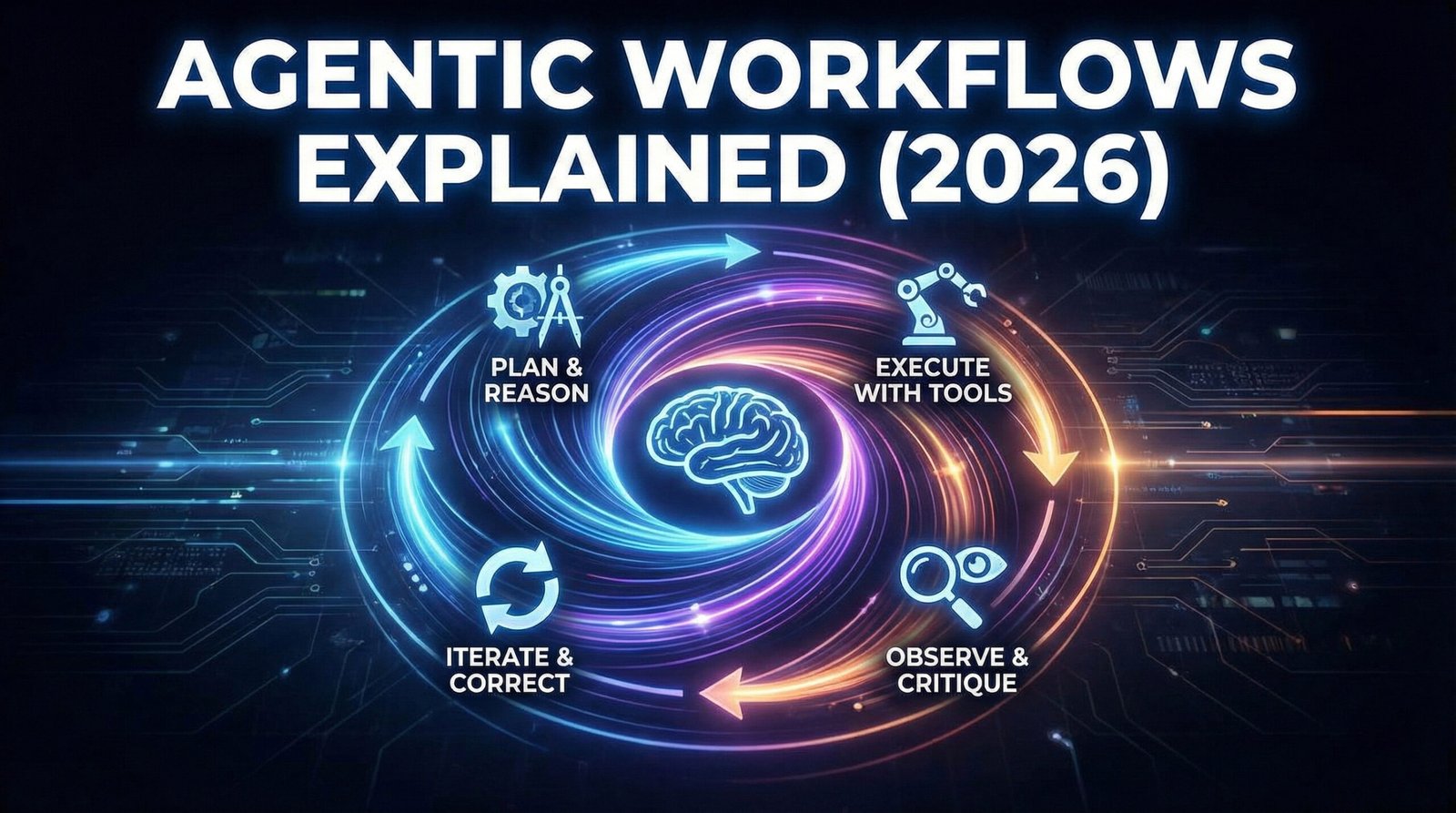
If you are still trying to master “Prompt Engineering” in 2026, you are solving yesterday’s problem. The real breakthrough this year isn’t about writing better prompts—it’s about building Agentic Workflows.
While a standard Large Language Model (LLM) waits for you to type a question, Agentic Workflows empower AI to act autonomously. They don’t just generate text; they plan, execute, critique, and iterate until the job is done. This is the difference between an AI that writes a to-do list and an AI that actually does the tasks on the list.
Here is your complete beginner’s guide to understanding Agentic Workflows, why experts call them the future of AI, and how you can start building them today using tools like Google Antigravity and Cursor.
The Death of the “Prompt”: What Changed?
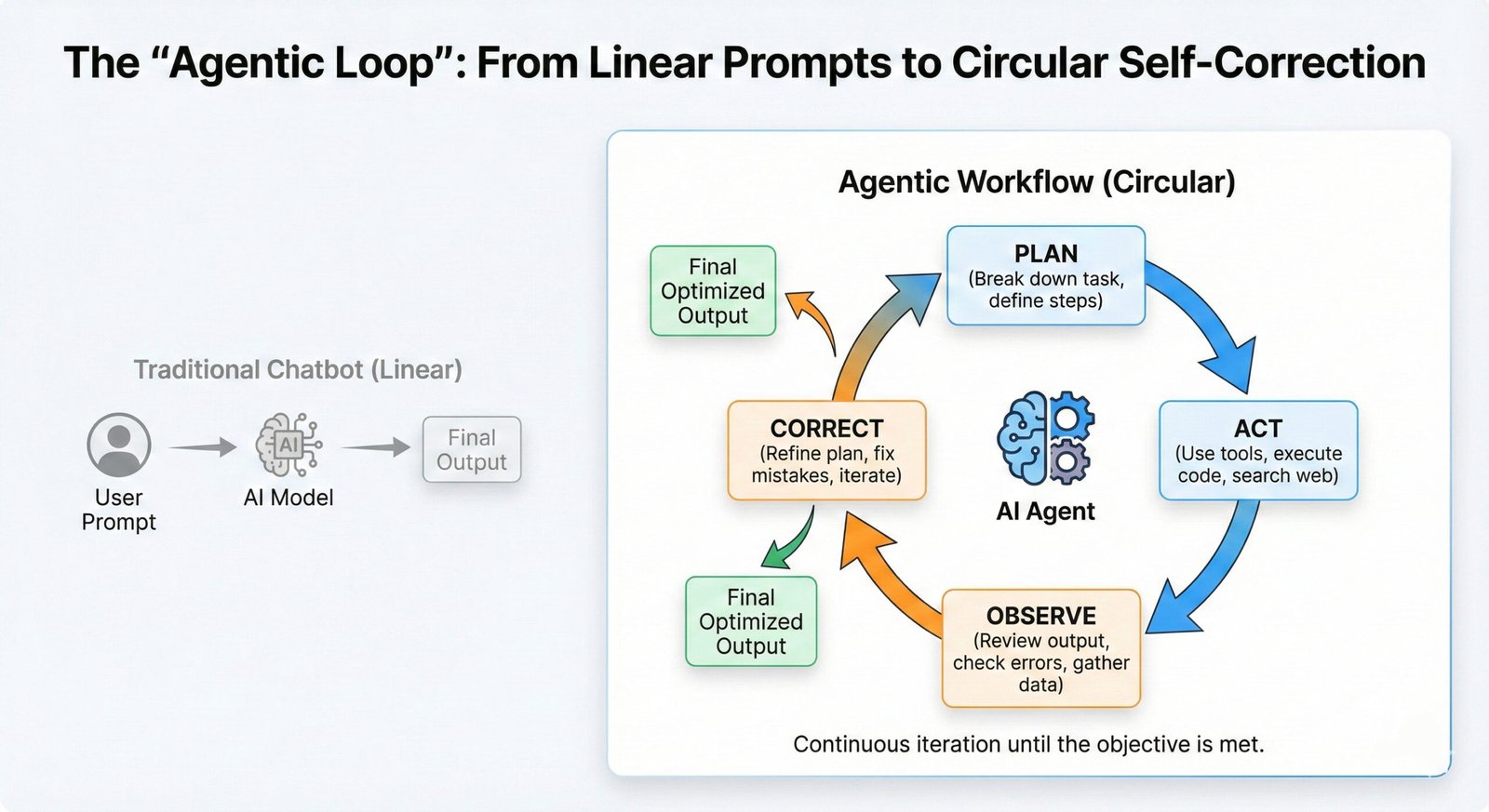
To understand Agentic Workflows, you first need to understand the limitations of the “Zero-Shot” prompt. In 2024, we treated AI like a magic 8-ball: we asked a question and hoped for a good answer. If the answer was wrong, we had to start over.
Agentic Workflows solve this by treating the AI less like an oracle and more like an employee. Instead of a single attempt, the system is designed to loop. This shift is critical for developers; just as Python 3.14 removed the GIL to improve performance, Agentic Workflows remove the “human bottleneck” to improve autonomy.
Key Characteristics of Agentic Systems:
- Iterate: If the first draft of code fails, the agent reads the error message and fixes it automatically.
- Use Tools: It can browse the web, run Python scripts, or query a database to get the information it needs.
- Collaborate: In advanced Agentic Workflows, multiple specialized agents (e.g., a “Coder” and a “Reviewer”) talk to each other to solve a problem.
The 4 Design Patterns of Agentic Workflows
According to AI pioneer Andrew Ng, there are four main patterns that define successful Agentic Workflows. Mastering these is the key to unlocking 10x better performance from your models.
1. Reflection
In this pattern, the agent doesn’t just stop after generating an answer. It is instructed to critique its own work. For example, a coding agent might write a script, then “read” it to check for security vulnerabilities before showing it to you.
2. Tool Use
This allows the model to step outside its training data. If you ask about “Apple’s stock price today,” a standard model might hallucinate. An agent using Agentic Workflows will trigger a “Web Search” tool, find the real-time data, and then answer.
3. Planning
For complex goals like “build a mobile app,” the agent first breaks the request down into a multi-step plan. It executes step 1, checks the result, then moves to step 2. This sequential execution is the heart of Agentic Workflows.
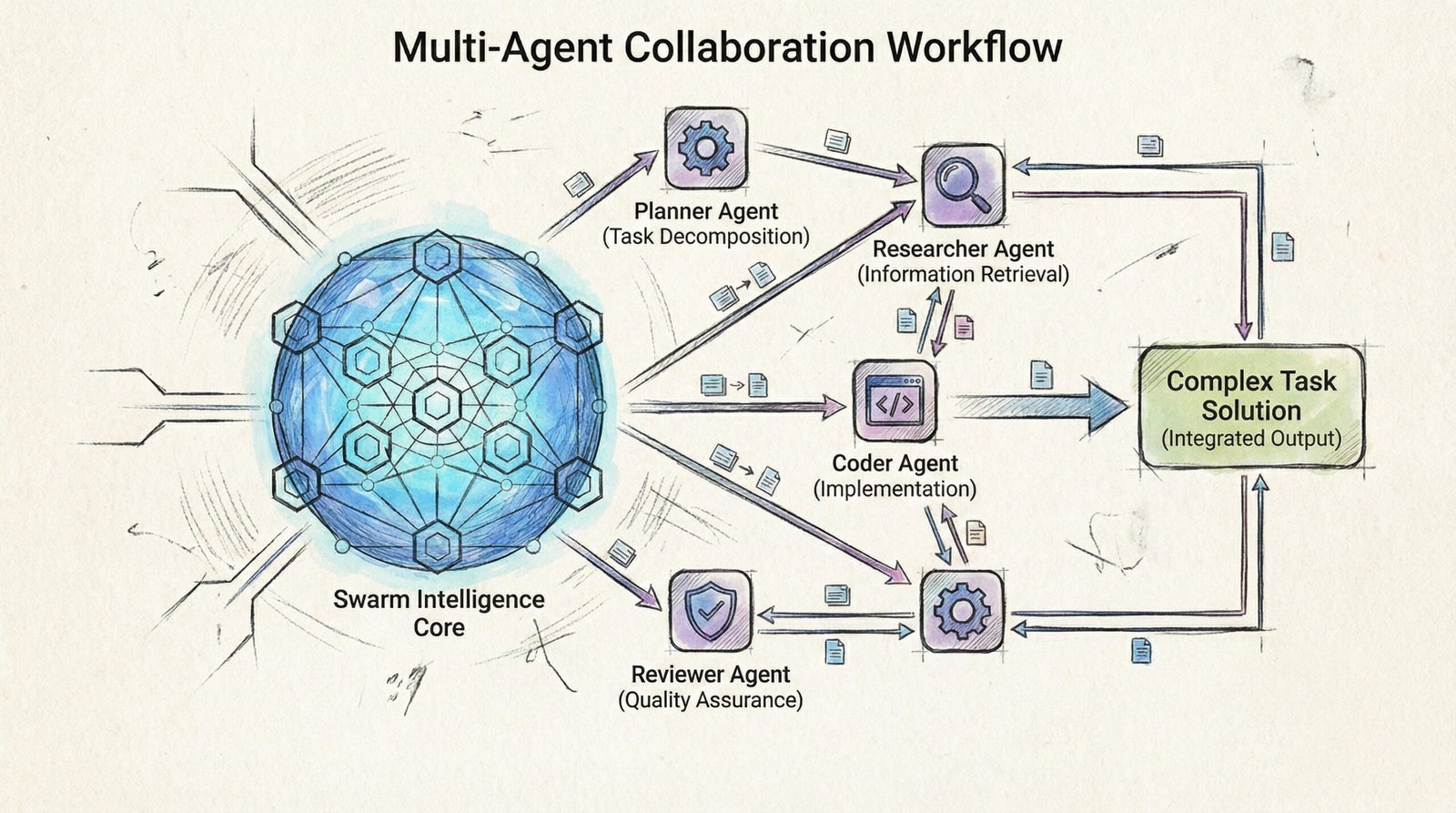
4. Multi-Agent Collaboration
This is the “Manager” model. One master agent orchestrates several sub-agents. You might have a “Researcher” agent gathering data and a “Writer” agent drafting the report, all working in parallel.
Real-World Examples: Agentic Workflows in Action
Theory is great, but how does this actually look in production? Here are three concrete examples of how Agentic Workflows are replacing traditional automation in 2026.
1. The “Self-Healing” Codebase
Old Way: A CI/CD pipeline fails. The developer gets an email, reads the log, finds the error, pushes a fix, and restarts the build.
Agentic Way: The agent detects the build failure. It reads the error log, identifies a missing dependency, edits the package.json file, installs the package, and restarts the build. It only alerts the human if the second attempt fails.
2. The “Researcher” Swarm
Old Way: You ask ChatGPT, “What are the latest crypto trends?” It gives you a generic list based on old training data.
Agentic Way: You trigger a research agent. It spawns three sub-agents:
- Browser Agent: Scrapes the latest news from CoinDesk and X (Twitter).
- Data Agent: Pulls live price data via API.
- Analyst Agent: Synthesizes the news and data into a PDF report.
3. Customer Support Level 2
Old Way: A chatbot answers FAQs. If the user has a billing issue, it says, “Please contact support.”
Agentic Way: The agent authenticates the user, checks the Stripe database for the failed transaction, identifies the reason (expired card), sends a secure link to update payment details, and confirms the refund—all without a human agent opening a ticket.
Why 2026 is the Year of Agentic AI
We are seeing a massive shift in the developer ecosystem. Tools are no longer building “Chat” interfaces; they are building “Workbenches” for Agentic Workflows.
“The next wave of AI isn’t about better models. It’s about better flows. A mediocre model in a great Agentic Workflow beats a smart model in a zero-shot prompt every time.”
— Andrew Ng, AI Fund
Platforms like Google Antigravity and Cursor Composer are effectively commercialized versions of these workflows. They wrap the complexity of “Planning” and “Reflection” into a simple UI where you just click “Apply.”
Verdict: Stop Prompting, Start Architecting
If you want to stay relevant in the AI economy, stop obsessing over the perfect prompt. Start thinking like a systems architect. How can you chain LLMs together? How can you give them tools to self-correct?
My advice? Start small. Use a tool like LangGraph or Flowise to build a simple “Reflection” loop. Once you see the power of Agentic Workflows in action, you will never go back to a static chatbox again.
Agentic Workflows are no longer optional they’re redefining how developers build, automate, and scale work in 2026. The earlier you adopt them, the more of a competitive advantage you gain.
Frequently Asked Questions (FAQ)
What are Agentic Workflows?
Agentic Workflows are systems where an AI model iteratively plans, executes, and critiques its own actions to achieve a goal, rather than just providing a single immediate response.
Do I need to know Python to build them?
Not necessarily. While frameworks like LangChain require code, new 2026 tools like Google Antigravity and Replit Agent allow you to build Agentic Workflows using natural language instructions.
Why are Agentic Workflows better than Chatbots?
Chatbots are linear and fragile; one mistake ruins the output. Agentic Workflows are circular and resilient; they can catch their own errors and fix them before the user even sees the result.
What is the best tool for Agentic Workflows?
For developers, Cursor 2.0 is the current gold standard for coding workflows. For enterprise data tasks, platforms like OpenAI Operator and Palantir AIP are leading the market.