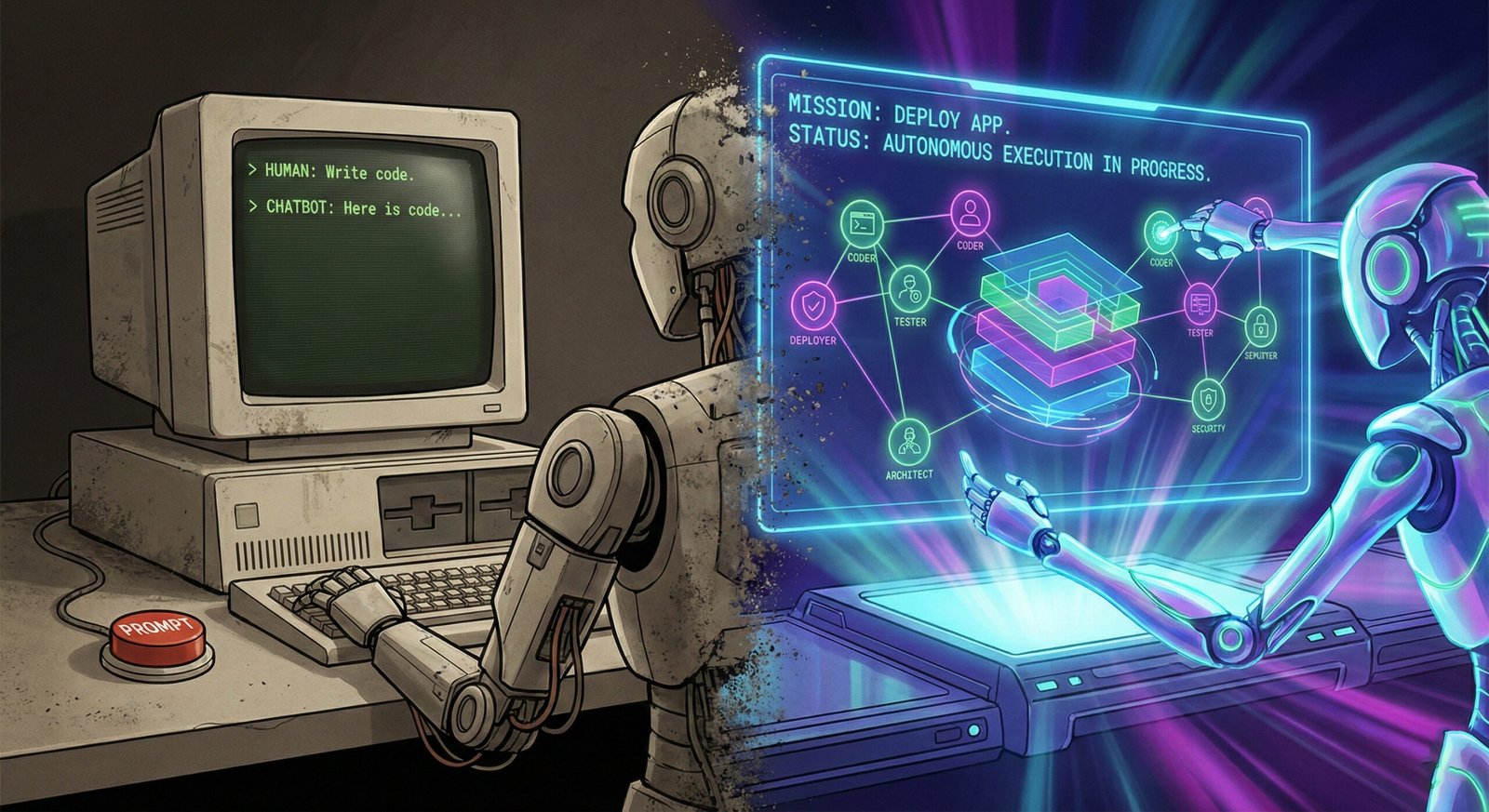
The “Chatbot” era is officially dead. As we settle into 2026, the artificial intelligence landscape has shifted from passive text generators to active, goal-oriented Autonomous AI Agents.
While the last few years were defined by “chatting” with AI, 2026 is defined by AI that does. From writing and deploying entire software stacks to navigating web browsers independently, the new wave of Autonomous AI Agents is not just assisting humans; it is acting alongside them. We are witnessing the death of the “prompt” and the birth of the “mission.”
Here is everything you need to know about the rise of Autonomous AI Agents, the panic inside the traditional chatbot market, and why tools like Google Antigravity and Cursor 2.0 are rewriting the rules of productivity.
The Death of the Chatbox: Entering the Agentic Era
To understand why these new systems are the dominant trend of 2026, we must look at the limitations of their predecessors. Traditional chatbots required constant human “hand-holding.” You had to break complex tasks into small prompts, copy-paste code, and manually verify every step.
Autonomous AI Agents solve this “friction problem” by utilizing Agentic Workflows. Instead of predicting the next word, these systems predict the next action. They have permission to:
Key Capabilities of Agentic Systems:
- Read and Write Files: They can directly modify your codebase, saving hours of copy-pasting.
- Execute Commands: Agents run terminal commands to install dependencies, run builds, and fix errors in real-time.
- “The Digital Employee”: Unlike a chatbot, Autonomous AI Agents can plan multi-step objectives. If you ask them to “deploy the app,” they handle the git commit, the build process, and the server config.
Top Autonomous AI Agents Defining 2026
The market is currently flooded with tools claiming “agentic” capabilities, but three major players have established themselves as the leaders. These tools are not just software; they are platforms.
1. Google Antigravity: The “Mission Control”
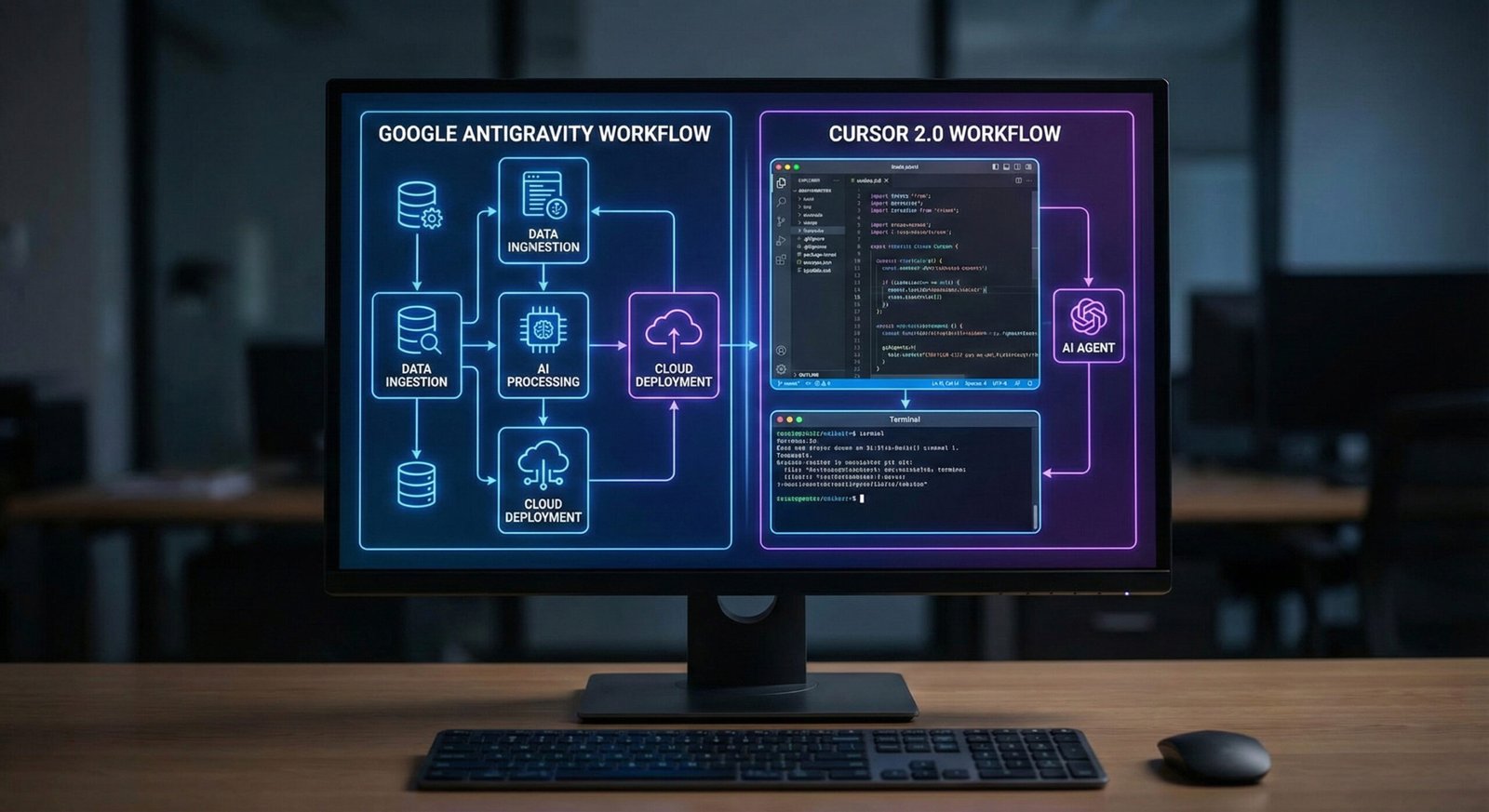
If there is one tool that epitomizes the shift, it is Google Antigravity. It is an “Agent-First” IDE. When you open Antigravity, you aren’t greeted by a text file; you are greeted by an Agent Manager.
“Antigravity doesn’t just suggest code; it acts as an architect, orchestrating multiple Autonomous AI Agents to build software while you supervise.”
— Google Developer Blog
2. Cursor 2.0 & The “Composer”
Cursor 2.0 has solidified its place as the developer’s favorite. Its “Composer” feature manages “Agentic Loops”—it writes code, runs the test, sees the error, fixes the code, and re-runs the test. This loop is the heart of effective agentic systems.
3. OpenAI Operator
For general tasks, OpenAI Operator is the “Computer-Using” standard. It browses the web, books flights, and manages your calendar. It is the agent for your personal life.
The Rebellion: DeepSeek V3.2 & Open Source
As we embrace these proprietary tools, a significant “rebellion” has emerged in the form of DeepSeek V3.2. While Google and OpenAI fight for cloud dominance, DeepSeek has captured the open-source community.
Why It Matters: For companies concerned about privacy, systems built on DeepSeek offer a secure alternative. They allow you to run powerful Autonomous AI Agents locally, ensuring no proprietary data ever leaves your “LAN” environment.
Verdict: Adapt or Become Obsolete
The transition to agentic workflows marks the most significant milestone in artificial intelligence since the transformer model. In 2026, we are no longer impressed by an AI that can write a poem; we demand AI that can build the platform.
My advice? Start experimenting with Top 10 AI Tools like Cursor today. The future belongs to those who learn to manage Autonomous AI Agents, not just prompts.
Frequently Asked Questions (FAQ)
What is the difference between a Chatbot and Autonomous AI Agents?
A chatbot waits for user input and responds with text. Autonomous AI Agents can plan tasks, execute actions (like coding or browsing), and loop through self-correction processes to achieve a goal without constant human help.
Is Cursor 2.0 free to use?
Cursor 2.0 operates on a freemium model. While basic features are free, the advanced agent capabilities, including the “Composer” model, usually require a Pro subscription.
Will Autonomous AI Agents replace developers?
No, but they are changing the role. Engineers in 2026 are becoming “AI Orchestrators.” The focus is shifting from writing syntax to reviewing the work performed by the agents.
Can Autonomous AI Agents browse the web?
Yes. Tools like OpenAI Operator and Perplexity’s agentic updates allow Autonomous AI Agents to navigate the web, read live data, and interact with websites just like a human user.