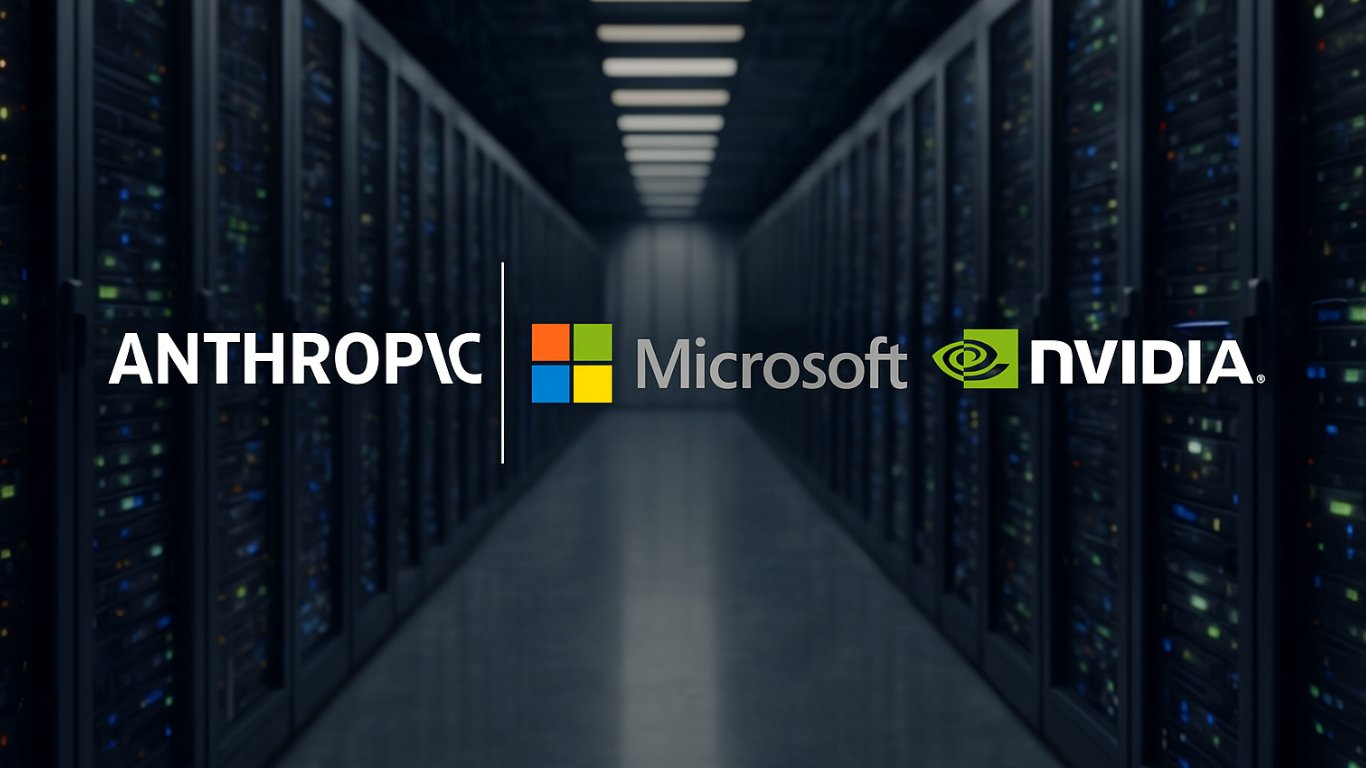
The new Microsoft Anthropic NVIDIA Partnership is elevating the criterion for investing in cloud framework and making AI models more readily available. This collaboration represents a fundamental shift away from depending on a single model towards a diverse ecological community that is maximized for equipment, altering just how senior innovation execs manage their operations.
According to Microsoft Chief Executive Officer Satya Nadella, the collaboration between both companies is an equally valuable arrangement, with each entity anticipated to end up being a considerable customer of the other. As Anthropic uses Microsoft’s Azure facilities, Microsoft plans to incorporate Anthropic’s AI versions into its numerous products and
Anthropic has actually committed to buying $30 billion of Azure compute capacity. This number shows the immense computational needs required to train and release the next generation of frontier models. The partnership involves a details equipment trajectory, beginning with NVIDIA’s Grace Blackwell systems and progressing to the Vera Rubin style.
NVIDIA’s CEO Jensen Huang anticipates that the Grace Blackwell style, incorporated with NVLink, will provide a significant boost in speed, which is vital for minimizing token business economics.
Huang’s idea of a “shift-left” design method, which entails instant assimilation of NVIDIA innovation on Azure, suggests that companies using Claude on Azure will certainly experience distinct performance attributes contrasted to normal instances. This close integration could affect choices on the design of systems for applications conscious latency or calling for high throughput for set processing.
According to Huang, economic planning has to currently incorporate 3 concurrent scaling concepts: the scaling that occurs the scaling that happens throughout the actual reasoning process.
Generally, AI calculate costs were weighted heavily towards training. Nevertheless, Huang notes that with test-time scaling– where the version “believes” longer to create higher quality solutions– inference expenses are climbing.
Subsequently, AI functional expense (OpEx) will certainly not be a flat rate per token but will associate with the intricacy of the reasoning called for. Budget forecasting for agentic operations need to consequently end up being more vibrant.
Microsoft has vowed to maintain Claude’s access throughout the Copilot family to get rid of the obstacle of incorporating into present venture operations.
The emphasis is mainly on the capability to take action in operations. Huang mentioned that Anthropic’s Design Context Protocol (MCP) has actually dramatically changed the area of agentic AI. It is essential for leaders in software design to be aware that NVIDIA designers are currently using Claude Code to upgrade older codebases.
From a security viewpoint, this combination streamlines the boundary. Protection leaders vetting third-party API endpoints can currently arrangement Claude abilities within the existing Microsoft 365 conformity border. This enhances data governance, as the interaction logs and information handling stay within the recognized Microsoft tenant agreements.
Supplier lock-in persists as a rubbing point for CDOs and risk police officers. This AI calculate collaboration minimizes that issue by making Claude the only frontier design available throughout all three prominent global cloud solutions. Nadella stressed that this multi-model technique builds on, as opposed to replaces, Microsoft’s existing partnership with OpenAI, which remains a core element of their approach.
For Anthropic, the alliance settles the “venture go-to-market” obstacle. Huang kept in mind that developing a business sales motion takes decades. By piggybacking on Microsoft’s recognized networks, Anthropic bypasses this adoption contour.
This trilateral arrangement changes the purchase landscape. Nadella urges the industry to move beyond a “zero-sum narrative,” suggesting a future of broad and resilient capabilities.
Companies require to evaluate their present model portfolios and contrast the complete price of possession (TCO) for Claude Sonnet 4.5 and Piece 4.1 on Azure with their current deployments. The commitment to a “gigawatt of capacity” recommends that capacity limitations for these models might be less of a problem contrasted to previous equipment cycles.
With the AI computing collaboration in position, business need to shift their attention from purchase to performance, guaranteeing that the most ideal AI model is straightened with each business feature to completely utilize the capabilities of their improved facilities and achieve optimal outcomes.