SmartHackly
  • Home
  • News
  • AGI
  • Open Source
  • AI Applications
  • Startups
  • Enterprise
  • Resources
  • Robotics
No Result
View All Result
SAVED POSTS
SmartHackly
  • Home
  • News
  • AGI
  • Open Source
  • AI Applications
  • Startups
  • Enterprise
  • Resources
  • Robotics
No Result
View All Result
SmartHackly
No Result
View All Result

Nvidia’s Earnings vs. The Market: Why Jensen Huang Isn’t Scared of an “AI Bubble”

November 23, 2025
in Enterprise, News
0
Share to Facebook

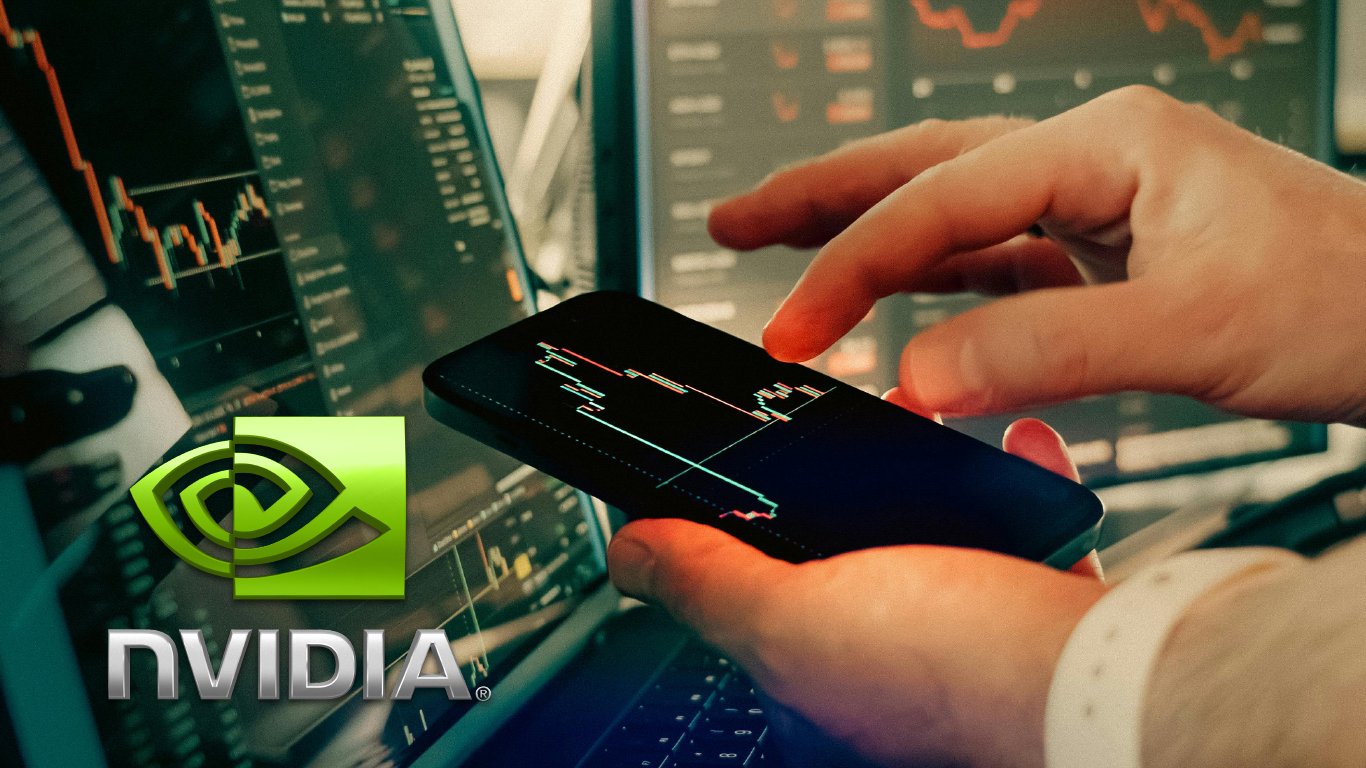
Nvidia (NASDAQ:NVDA) just dropped another blockbuster report, sparking new debates about the Nvidia AI Bubble. While CEO Jensen Huang was optimistic, the market reacted with fear.

But by the market close, those gains vanished.

This rollercoaster ride has left investors asking: If Nvidia is doing this well, why is the market so scared? As a developer watching the infrastructure build-out firsthand, and an analyst watching the charts, I believe we are seeing a disconnect between “Market Sentiment” and “Technical Reality.”

The Market Disconnect

With the Federal Reserve likely holding rates steady in December, the market is running out of short-term catalysts. The selling we are seeing isn’t because Nvidia failed; it’s because the market is “oversold” and looking for a reason to take profits before the holidays.

Some strategists are calling for an S&P 500 surge to 7,000, but that looks ambitious. We are witnessing a rare event: Excellent earnings reports resulting in negative stock movement. This usually signals that valuation concerns (fear of the bubble) are overpowering the actual fundamentals.

Why I Prefer a Correction Over a Crash

Ironically, this sell-off makes me more bullish on AI, not less.

  • The Bubble Scenario: Markets go parabolic, valuations hit 100x P/E across the board, and then everything implodes (like the Dot-Com crash).
  • The Current Scenario: We are seeing regular, healthy corrections. Fear is keeping valuations in check. This “Wall of Worry” prevents a true bubble from forming.
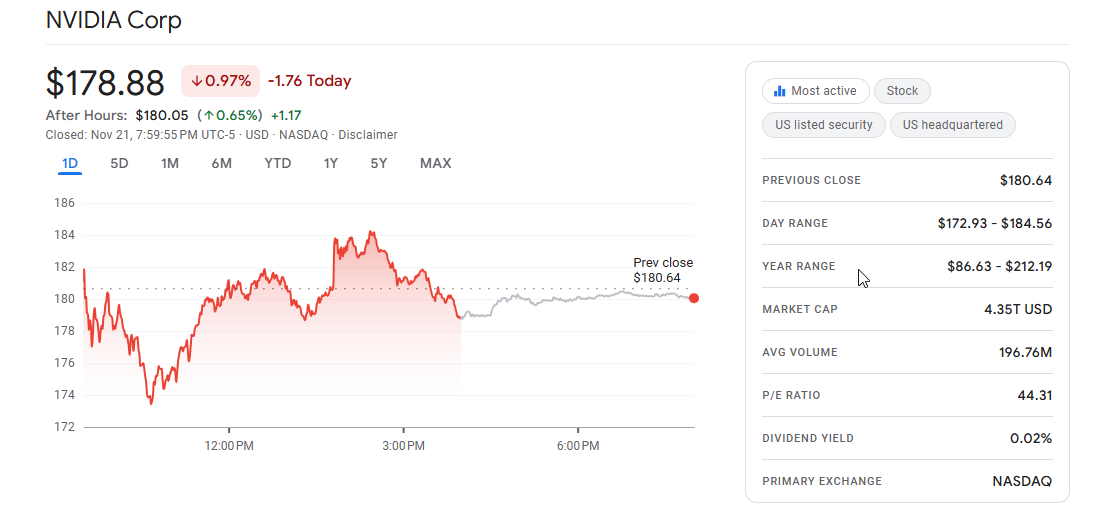
Nvidia stock chart showing volatility
Caption: Volatility strikes despite strong earnings – a sign of healthy market skepticism.

Jensen Huang’s “Vantage Point”

When asked about the bubble, Jensen Huang famously said, “From our perspective, we observe something entirely different.”

Why does he say that? Because he sees the order book.

From a technical standpoint, the demand for H100 and Blackwell chips is not slowing down. The “Bubble” argument assumes that companies will stop buying chips because they aren’t making money yet. But in the engineering world, we are seeing the opposite: infrastructure is the bottleneck, not demand.

Valuation Reality Check: Tesla vs. Amazon

Not all “Magnificent Seven” stocks are in the same boat. If you are hunting for bubbles, you have to look at the Price-to-Earnings (P/E) ratio.

  • The Outlier: Tesla (TSLA) is trading at nearly 178x forward P/E. Unless their “Optimus” robot becomes a household item overnight, this valuation relies heavily on future dreams, not current reality.
  • The Bargain: Amazon (AMZN) is trading at a reasonable 28x forward P/E. With their AWS dominance, Zoox robotaxis, and robotics integration, they are an AI powerhouse trading at a discount compared to Tesla.

The Bottom Line

Nvidia’s earnings proved the technology is working and the money is real. The market’s reaction proved that investors are skittish.

We may have to wait a few more quarters for the volatility to settle, but unless you are buying penny-stock AI startups with no revenue, the comparison to the “Dot-Com Crash” is exaggerated. The infrastructure is being built, and the correction we are seeing now is exactly what we need to sustain long-term growth.


Frequently Asked Questions (FAQ)

What is the “AI Bubble” fear?

It is the concern that AI stock prices (like Nvidia) have risen too high, too fast, and are driven by hype rather than actual future profits, potentially leading to a market crash.

Did Nvidia’s earnings prove the bubble is gone?

Not entirely. While the earnings were excellent, the market’s negative reaction suggests investors are still worried about high valuations and are taking profits early.

Is Tesla considered an AI Bubble stock?

With a P/E ratio over 170x, many analysts consider Tesla significantly overvalued compared to other tech giants like Amazon or Alphabet, making it riskier if growth slows down.

Should I sell my AI stocks during this correction?

If you hold high-quality infrastructure companies (like Nvidia, Microsoft, Amazon), corrections are often viewed as buying opportunities. However, highly speculative AI startups with no earnings are at higher risk.


Tags: AI BubbleJensen HuangMagnificent SevenNVDANVIDIAStock MarketTech Analysis
TweetShare
Aymen Dev

Aymen Dev

Aymen Dev is a Software Engineer and Tech Market Analyst with a passion for covering the latest AI news. He bridges the gap between code and capital, combining hands-on software testing with financial analysis of the tech giants. On SmartHackly, he delivers breaking AI updates, practical coding tutorials, and deep market strategy insights.

Related Stories

Futuristic 3D digital brain illustration representing ChatGPT 5.2's Reflection Engine

ChatGPT 5.2: The Ultimate 2026 Survival Guide to Mastering Agent Workflows

by Aymen Dev
December 13, 2025
0

ChatGPT 5.2 is here, and it represents a definitive shift in the history of artificial intelligence. If GPT-4 was the era of "Chat," and GPT-5 was the era...

AI agents vs traditional automation in 2026 enterprise workflows

AI Agents Vs Traditional Automation: What You Need To Know In 2026

by Aymen Dev
December 11, 2025
0

AI agents vs traditional automation is not just a buzzword comparison in 2026 – it is the core strategic question for any team serious about productivity, scalability, and...

a man interacting with an AI agent on a screen, representing Perplexity AI Agents automating enterprise workflows.

How Perplexity AI Agents Are Transforming Enterprise Automation

by Aymen Dev
December 10, 2025
0

Perplexity AI Agents are rapidly transforming the platform from an AI search engine into a serious enterprise automation layer, designed to execute complex, multi-step business workflows. This shift...

Model Context Protocol (MCP) diagram showing an AI neural network connecting to tools, APIs, and data sources

The Ultimate Guide to MCP (Model Context Protocol) — 2026 Edition

by Aymen Dev
December 10, 2025
0

Model Context Protocol (MCP) is quickly becoming one of the most important standards in modern AI infrastructure. As agentic systems, LLM tools, and automated workflows expand across industries,...

Next Post
dji Simo, OpenAI's new CEO of Applications, graphic with Meta and Instacart logos highlighting her tech leadership background.

OpenAI Splits the Throne: Fidji Simo Leads "Apps" While Altman Chases AGI

Leave a Reply Cancel reply

Your email address will not be published. Required fields are marked *

SmartHackly

SmartHackly delivers the latest AI news, automation trends, and productivity insights. Explore smart tools and guides to help you work efficiently in the digital age.

Recent Posts

  • ChatGPT 5.2: The Ultimate 2026 Survival Guide to Mastering Agent Workflows
  • AI Agents Vs Traditional Automation: What You Need To Know In 2026
  • How Perplexity AI Agents Are Transforming Enterprise Automation

Categories

  • AGI
  • AI Applications
  • Enterprise
  • News
  • Open Source
  • Resources
  • Robotics
  • Startups

Weekly Newsletter

  • About
  • Privacy Policy
  • Terms and Conditions
  • Contact Us

© 2025 SmartHackly - Your source for AI tools, automation insights, and tech innovation. All rights reserved.

Welcome Back!

Login to your account below

Forgotten Password?

Retrieve your password

Please enter your username or email address to reset your password.

Log In
No Result
View All Result
  • News
  • AGI
  • AI Applications
  • Enterprise
  • Robotics
  • Open Source
  • Resources
  • Startups

© 2025 SmartHackly - Your source for AI tools, automation insights, and tech innovation. All rights reserved.