

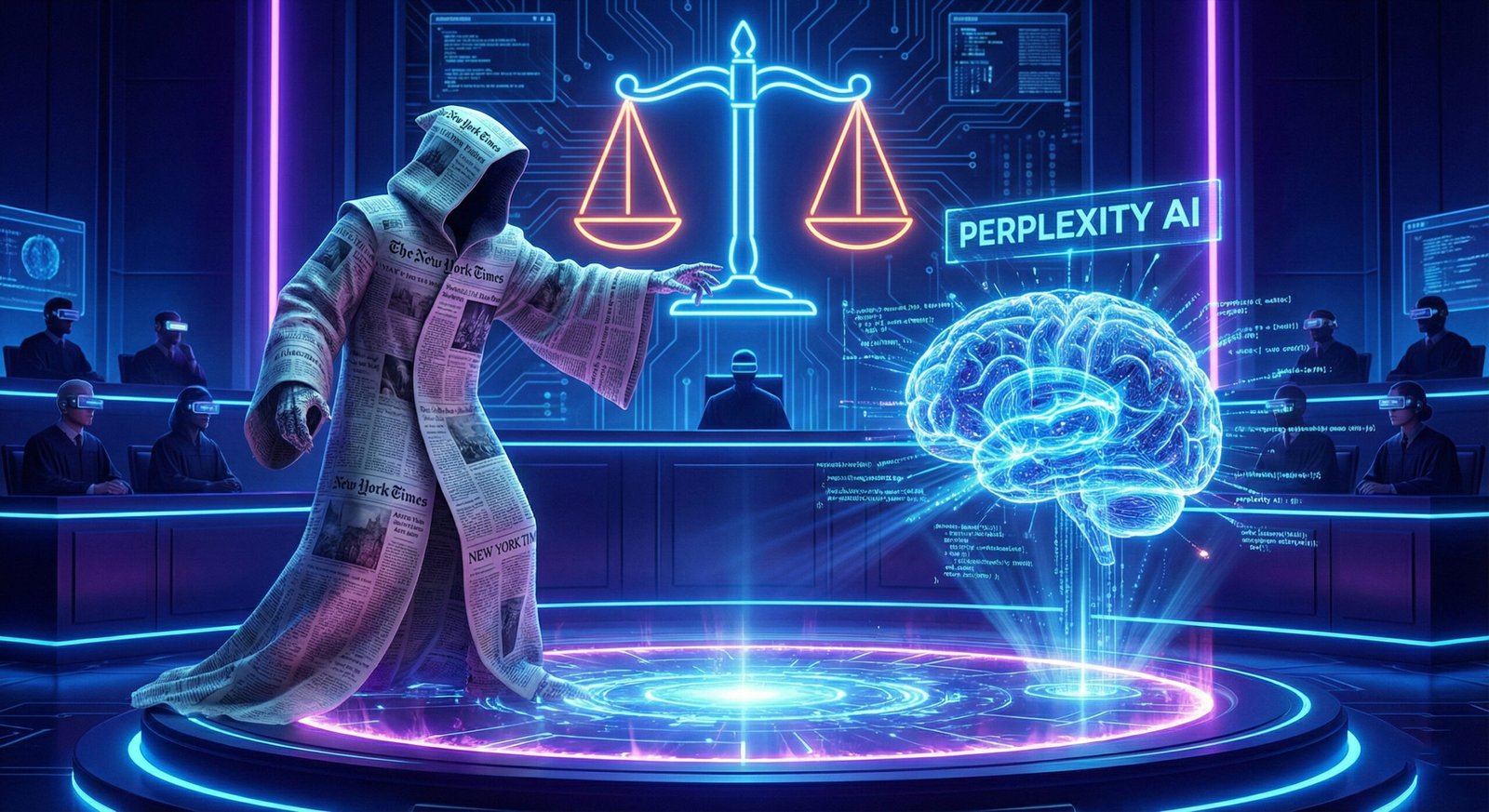
The legal war between traditional media and Artificial Intelligence just went nuclear. In a move that could redefine the internet, the NYT sues Perplexity AI, accusing the “answer engine” of massive copyright infringement.
Unlike previous lawsuits against OpenAI, this one cuts deeper. It targets the very mechanism of “AI Search”—the ability of tools like Perplexity to read the web and summarize it for you. If the NYT sues Perplexity and wins, the era of getting direct answers without clicking links might be over.
This isn’t just a legal battle; it is a fight for the economic future of the web. Here is my comprehensive analysis of why the NYT sues Perplexity, what it means for developers, and if your favorite AI tools are safe.
1. Why NYT Sues Perplexity: The “Free Rider” Problem
To understand why the NYT sues Perplexity, you have to look at the money. Perplexity isn’t just an AI model; it’s a search replacement. When you ask Perplexity “Why did the stock market crash today?”, it reads articles from the NYT, WSJ, and Bloomberg, and gives you a summary.
According to the official complaint filed today, the Times argues this is “Free Riding.” They spend millions on journalism, sending reporters into war zones and courtrooms. Perplexity, they claim, simply takes that expensive information and serves it to users who never visit the NYT website.
The Core Allegations
- Bypassing Paywalls: The lawsuit alleges Perplexity accesses content behind the NYT paywall without a subscription.
- Substitute Product: The NYT claims Perplexity creates a “substitute” for their journalism, stealing their traffic and ad revenue.
- Hallucinations: The suit also mentions “reputational harm” caused by AI attributing fake quotes to the Times.
2. Perplexity’s Defense: Fair Use or Theft?
Perplexity CEO Aravind Srinivas has argued that their tool is a “knowledge engine,” not a pirate site. Their defense relies on the legal doctrine of Fair Use.
In copyright law, “Fair Use” allows you to use copyrighted material if you transform it significantly. Perplexity will likely argue that summarizing facts is transformative. Facts cannot be copyrighted; only the expression of facts can.
However, the fact that the NYT sues Perplexity suggests they have evidence of “verbatim” copying—where the AI spits out paragraphs of text identical to the original article. That is much harder to defend.
3. The RAG Technology Under Fire
This lawsuit puts a specific technology on trial: Retrieval-Augmented Generation (RAG). This is the tech that allows AI to “read” current websites.
If the court rules against Perplexity, it could make RAG illegal for commercial use without a license. This would be a disaster for the entire AI industry.
Who else uses RAG?
- Google: The new Gemini 3 uses RAG for search overviews.
- Microsoft: Copilot uses it to read the web.
- You: If you build AI agents using LangChain to read websites, you are using RAG.
4. The “Napster Moment” for AI Search
Many legal experts are comparing this moment to the music industry vs. Napster in the early 2000s. Napster argued they were just a technology platform; the courts ruled they were facilitating theft.
If the NYT sues Perplexity and wins, Perplexity might have to shut down or pivot to a licensing model (like Spotify). They would have to pay publishers every time the AI reads an article.
This would make “Free AI Search” impossible. Only giants like Google and OpenAI, who have billions to pay for licensing deals, would survive.
5. What This Means for Developers
As a developer, you might think this doesn’t affect you. You are wrong. If the courts decide that reading a website and summarizing it is copyright infringement, many common developer tools could become illegal.
- Web Scrapers: Tools that feed data to your agents could be sued.
- Summarization APIs: Apps that “summarize this news article” would need licenses.
- Training Data: The cost of building new models would skyrocket.
We are already seeing companies like OpenAI signing massive deals with publishers (like News Corp) to avoid this fate. Startups like Perplexity don’t have that kind of cash yet.
6. The Future: Licensing vs. “The Open Web”
The outcome of the NYT sues Perplexity case will decide if the Open Web remains open.
Scenario A: NYT Wins
The web becomes a “Walled Garden.” You can’t scrape or summarize anything without paying. Small AI startups die. Google and OpenAI become the gatekeepers of information because only they can afford the toll.
Scenario B: Perplexity Wins
The “Fair Use” doctrine is expanded to include AI summarization. The web remains open, but publishers (like the NYT) lose massive revenue and may go bankrupt or put everything behind hard login walls that AI can’t penetrate.
7. Conclusion: The Search Wars Have Just Begun
The fact that the NYT sues Perplexity is a sign that AI has “made it.” You don’t get sued by the New York Times unless you are a threat. Perplexity is no longer a cute demo; it is a competitor to the entire news industry.
For now, Perplexity is still live. But if you rely on it for your daily research, you might want to have a backup plan. The lawyers are here, and they bill by the hour.
Frequently Asked Questions (FAQ)
Why did the NYT sue Perplexity?
The NYT sues Perplexity because they claim the AI search engine illegally scrapes their copyrighted content to generate summaries, bypassing their paywall and stealing ad revenue.
Will Perplexity shut down?
It is unlikely to shut down immediately. However, if they lose the lawsuit, they may be forced to pay massive damages or change their technology to stop using NYT content.
Is AI search legal?
The legality is currently a grey area. While AI companies argue “Fair Use,” publishers argue “Copyright Infringement.” This lawsuit will help establish the legal precedent for NYT sues Perplexity and future AI cases.
Does OpenAI have a deal with NYT?
No, the NYT is also suing OpenAI. However, OpenAI has signed licensing deals with other publishers like Axel Springer and News Corp to use their content legally.