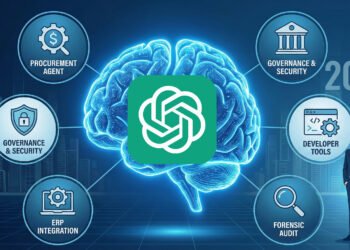

Perplexity AI Agents are rapidly transforming the platform from an AI search engine into a serious enterprise automation layer, designed to execute complex, multi-step business workflows. This shift positions Perplexity as a direct competitor to agent platforms from OpenAI, Anthropic and other AI leaders in 2026.
Instead of simply answering questions, Perplexity AI Agents are being built to perform work: automating research, extracting insights from internal data, calling APIs, and generating structured reports all driven by natural language prompts. For enterprises, that means moving from “ask and answer” to “ask and execute”.

How Perplexity AI Agents Transform Enterprise Workflows
Historically, enterprises have relied on a mix of manual processes, brittle automation scripts and one-off integrations. Every new tool or workflow often required fresh engineering effort. Perplexity AI Agents promise a unified interface that can orchestrate tasks across data sources, tools and APIs without constant custom coding.
Rather than building dozens of bespoke integrations, teams can delegate work to Perplexity AI Agents that can:
- Search internal and external knowledge sources in a single flow
- Run multi-step workflows with memory and context
- Call APIs and interact with business tools programmatically
- Assemble reports using verified, cited information
- Monitor topics or data changes and summarise updates for stakeholders
This evolution turns Perplexity from a “smart search box” into a workforce multiplier that can assist analysts, operators and decision-makers across the organisation.
Key Enterprise Use Cases for Perplexity AI Agents
Early examples shared by the company and industry observers highlight several high-impact scenarios where Perplexity AI Agents could deliver immediate value.
1. Automated Market & Competitive Research
Perplexity AI Agents can gather data from internal documents, PDFs, CRM notes, public filings and news content, then generate structured intelligence briefings. Instead of analysts spending hours collecting sources, agents can compile and summarise the landscape in minutes.
2. Compliance & Regulatory Monitoring
In regulated industries, staying on top of policy and regulatory updates is critical. Agents can scan new filings, guidance documents and legal updates, surface relevant changes and produce digestible summaries for legal or compliance teams.
3. Customer Support and Knowledge Retrieval
Perplexity AI Agents can pull context from help centre content, previous tickets, product docs and logs. That allows support teams to respond faster, with more consistent, well-cited answers based on the company’s own knowledge base.
4. DevOps and Engineering Assistance
Agents can analyse logs, detect anomalies, summarise incidents and even query observability tools. Instead of manually digging through dashboards, engineers can ask Perplexity AI Agents for “a summary of the last 24 hours of errors in service X” and get a structured answer.
5. Executive-Level Reporting
Executives can use agents to automatically compile weekly or monthly updates: key metrics, competitor moves, customer sentiment and financial snapshots. Perplexity AI Agents can pull from multiple sources and present information in concise, decision-ready formats.
The Competitive Backdrop: Why This Move Matters Now
The AI agent space is becoming one of the hottest battlegrounds in AI. OpenAI is building agent frameworks on top of GPT, Google is embedding agentic capabilities into Gemini, and Anthropic’s Claude is increasingly used in multi-step workflows.
By pushing Perplexity AI Agents into the enterprise space, the company is signalling that it wants to be more than a niche AI search engine. It wants to be part of the core automation stack that businesses rely on daily.
Perplexity’s advantage lies in combining search + action. Because its agents sit on top of a strong retrieval and citation layer, they can draw from up-to-date information with lower hallucination rates and clearer source attribution compared to many generic agents.
For comparison, you can think of Perplexity AI Agents as a more action-oriented layer on top of the kind of agentic workflows described in our
Agentic Workflows Beginner Guide, with search, retrieval and execution tightly integrated.
Risks and Challenges for Perplexity AI Agents
Despite the promise, enterprises cannot adopt Perplexity AI Agents blindly. Several critical questions need to be addressed before large-scale deployment:
- Security and access control: Agents must only see and act on data they are explicitly authorised to access. Misconfigured permissions could expose sensitive information.
- Accuracy and hallucination management: Even with strong retrieval, LLM-powered agents can still generate incorrect or misleading outputs. Enterprises need validation and approval steps, especially for high-stakes workflows.
- Compliance and auditing: Automated decisions and actions must be traceable. Logs of agent behaviour are essential for industries subject to regulations such as GDPR, HIPAA or financial reporting rules.
- Vendor dependence: Relying heavily on a single agent framework can create long-term lock-in. Architectures that use open standards such as the Model Context Protocol (MCP) offer more flexibility.
For a deeper look at how open standards like MCP can reduce this kind of lock-in and improve interoperability across models, see our
Ultimate Guide to Model Context Protocol (MCP).
How Perplexity AI Agents Fit Into the Future of Automation
If Perplexity AI Agents deliver on their promise at scale, they could accelerate the industry-wide shift from “AI assistants that answer questions” to AI collaborators that complete tasks. Instead of writing one-off scripts, teams will orchestrate workflows via natural language and rely on agents to handle the complexity.
For startups, this may lower the barrier to building sophisticated automation into their products. For enterprises, it could free up internal teams to focus on strategy and oversight while AI handles repeatable operational work.
Perplexity has not yet revealed every detail of its long-term roadmap, but the direction is clear: Perplexity AI Agents are central to the company’s vision of AI-native enterprise infrastructure. The next 12–18 months will show whether organisations adopt these agents as core building blocks of their automation strategy — or keep them in pilot mode while the ecosystem matures.
More information on Perplexity’s current capabilities and product roadmap is available on the official website at
perplexity.ai.