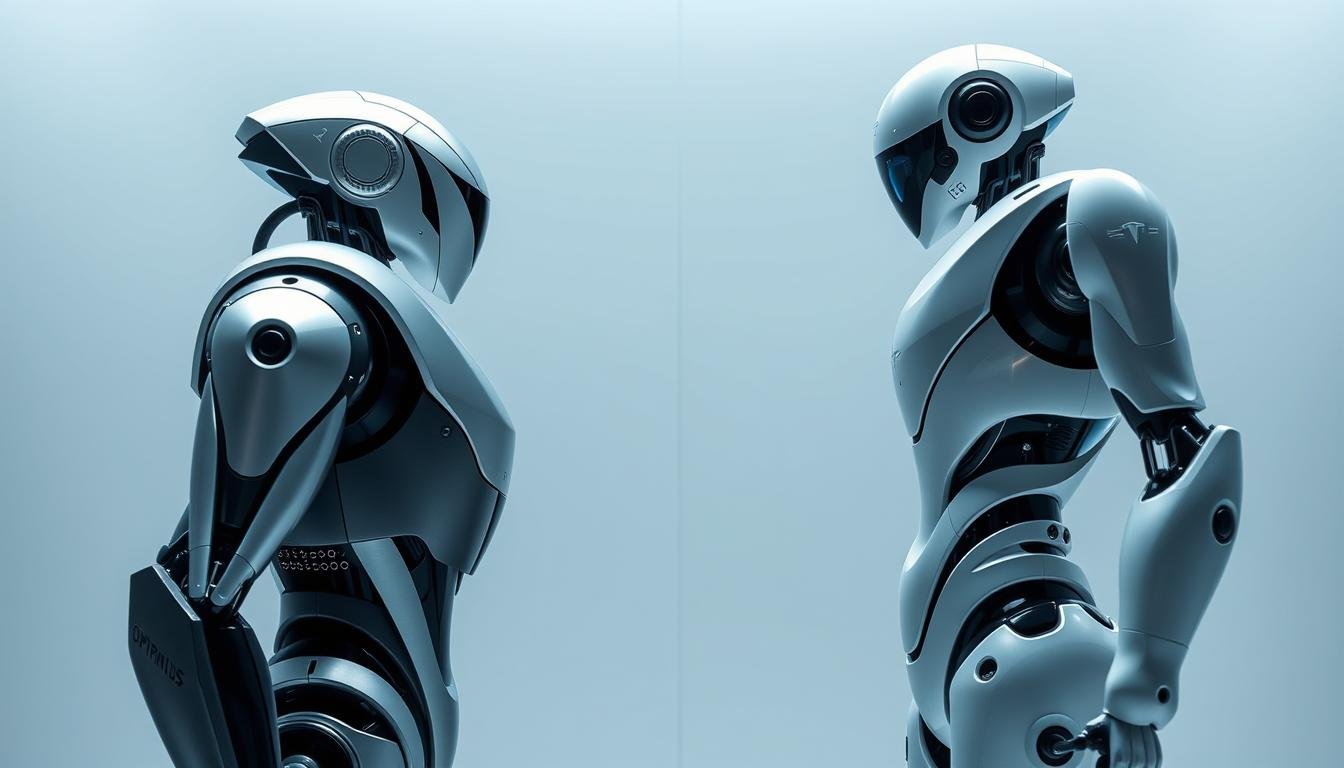
The world of robotics is rapidly evolving, with humanoid robots like Tesla Optimus and Figure 02 leading the charge. A recent development in this field is the unveiling of advanced AI capabilities that enable these robots to perform complex tasks.
I am witnessing a significant shift in how these robots are being designed to interact with their environment and humans. The integration of AI and robotics is making these machines more versatile and potentially useful in various real-world applications.
Key Takeaways
- Humanoid robots are becoming increasingly sophisticated.
- Tesla Optimus and Figure 02 are at the forefront of robotics innovation.
- Advanced AI capabilities are enhancing robot functionality.
- The potential applications of these robots are vast and varied.
- Comparing these robots can help determine their real-world usefulness.
The Race to Create Practical Humanoid Robots
The development of humanoid robots has reached a critical juncture, with Tesla and Figure AI emerging as key players in this rapidly evolving field. As we explore the current landscape of humanoid robotics, it becomes evident that these two companies are driving innovation and pushing the boundaries of what is possible.
The Current State of Humanoid Robotics
Humanoid robotics is a complex and multidisciplinary field that involves advancements in AI, mechanical engineering, and computer vision. Currently, humanoid robots are being designed to perform a variety of tasks, from simple assembly to complex decision-making. Tesla and Figure AI are at the forefront of this technology, with significant investments in research and development.
Why Tesla and Figure AI Are Leading Contenders
Tesla and Figure AI are leading the charge in humanoid robotics due to their strong backgrounds in AI and robotics. Tesla’s experience in manufacturing and AI-powered vehicles gives it a unique edge, while Figure AI’s focus on developing advanced humanoid robots has garnered significant attention. The table below highlights some key differences between the two companies:
| Company | Background | Focus Area |
|---|---|---|
| Tesla | Automotive and Energy | AI-powered vehicles and robotics |
| Figure AI | Robotics and AI | Advanced humanoid robots |
Meet Tesla Optimus: Elon Musk’s Vision for the Future
Elon Musk’s vision for the future of robotics is embodied in Tesla Optimus, a cutting-edge humanoid robot designed to assist humans in various tasks. As a significant innovation in the field of artificial intelligence and robotics, Tesla Optimus is poised to revolutionize industries and transform the way we live and work.
Development Timeline and Recent Demonstrations
Tesla Optimus has been in development for several years, with significant advancements in recent times. The latest demonstrations have showcased the robot’s ability to perform complex tasks with precision and accuracy. Some key milestones include:
- Initial prototype development
- Advanced AI integration
- Recent public demonstrations
Technical Specifications and Capabilities
Tesla Optimus boasts impressive technical specifications, including advanced AI capabilities, robust hardware, and enhanced dexterity. The robot is designed to navigate and interact with its environment with ease, making it suitable for a wide range of applications. Key features include:
- Advanced AI and machine learning algorithms
- High-precision actuators and sensors
- Robust and durable design
Optimus’s AI and Learning Systems
The AI and learning systems of Tesla Optimus are a crucial aspect of its functionality. The robot is equipped with sophisticated AI algorithms that enable it to learn from its environment and adapt to new situations. This allows Optimus to improve its performance over time, making it an increasingly valuable asset in various industries.
Introducing Figure 02: The Emerging Competitor
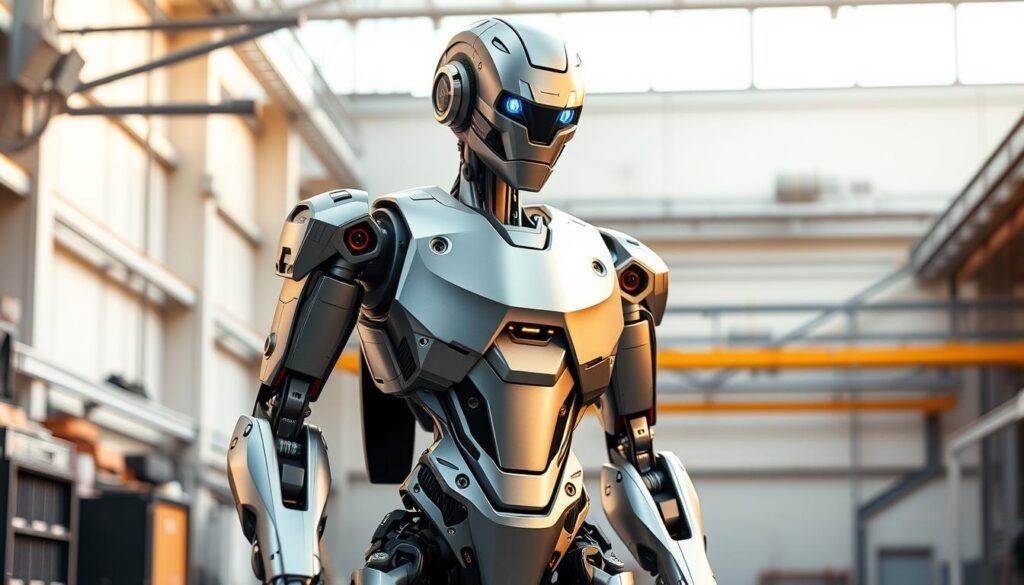
As Figure AI steps into the limelight, their latest creation, Figure 02, is making waves in the robotics community. This new humanoid robot is being touted as a potential game-changer in the industry.
Figure AI’s Background and Recent Announcements
Figure AI has been making significant strides in AI and robotics, with Figure 02 being their latest innovation. Recent announcements have highlighted the robot’s advanced capabilities and potential applications. With a strong focus on AI-driven decision-making, Figure AI is positioning itself as a leader in the humanoid robotics space.
Figure 02’s Hardware and Engineering
Figure 02 boasts impressive hardware and engineering, with advancements in mobility, dexterity, and sensor technology. The robot’s design allows for seamless interaction
AI Architecture and Decision-Making Systems
The AI architecture of Figure 02 is centered around advanced decision-making systems, enabling the robot to learn and adapt in complex situations. This allows Figure 02 to efficiently navigate its surroundings and perform tasks with precision. The integration of AI and robotics in Figure 02 represents a significant step forward in the field.
With Figure 02, Figure AI is demonstrating its commitment to pushing the boundaries of what is possible in humanoid robotics. As the robotics landscape continues to evolve, Figure 02 is poised to play a key role in shaping the future of AI and robotics.
Tesla Optimus vs. Figure 02: Which Humanoid Robot is Actually Useful?
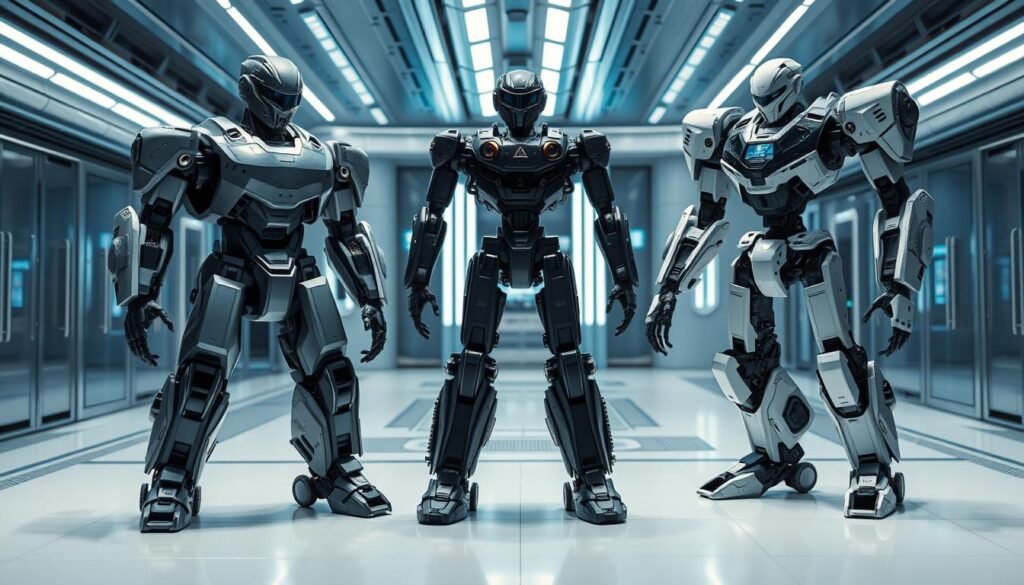
With the rise of humanoid robots, it’s essential to compare Tesla Optimus and Figure 02 to determine their practicality. Both robots have demonstrated impressive capabilities, but their usefulness in real-world applications is what truly matters.
Mobility and Navigation Capabilities
Tesla Optimus and Figure 02 exhibit different approaches to mobility and navigation. Tesla Optimus utilizes advanced navigation systems, allowing it to move efficiently in complex environments. In contrast, Figure 02 employs a more agile design, enabling it to navigate through tighter spaces. Key differences include:
- Tesla Optimus: Advanced navigation systems, robust mapping capabilities
- Figure 02: Agile design, enhanced flexibility in tight spaces
Dexterity and Object Manipulation
Both robots have made significant strides in dexterity and object manipulation. Tesla Optimus features advanced robotic hands capable of performing delicate tasks, while Figure 02 boasts improved grip strength and manipulation precision. The main differences are:
- Tesla Optimus: Delicate task performance, advanced robotic hands
- Figure 02: Improved grip strength, enhanced manipulation precision
Learning Abilities and Adaptability
The learning abilities and adaptability of these robots are crucial for their practical application. Tesla Optimus leverages AI-driven learning systems, allowing it to adapt to new tasks. Figure 02 also employs sophisticated AI, enabling it to learn from its environment and improve over time.
Safety Features and Human Interaction
Safety is a paramount concern when it comes to humanoid robots. Both Tesla Optimus and Figure 02 incorporate multiple safety features, such as collision detection and emergency shutdown protocols, to ensure safe interaction with humans.
Real-World Applications and Practical Use Cases
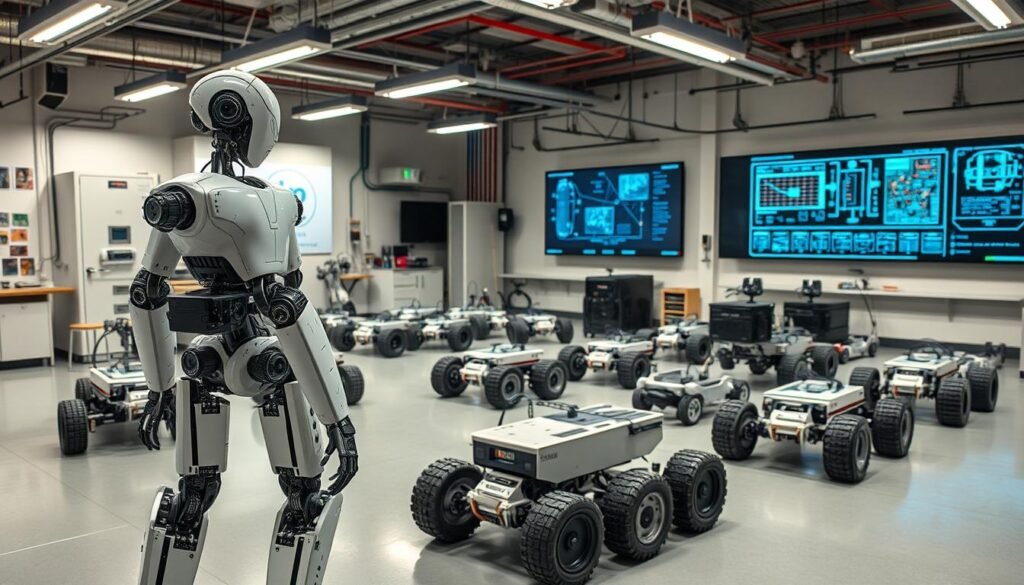
With advancements in robotics, Tesla Optimus and Figure 02 are poised to revolutionize various sectors with their practical applications. As these humanoid robots continue to evolve, their potential uses in real-world scenarios are becoming increasingly evident.
Tesla Optimus, for instance, is being designed to assist in both industrial and domestic settings. Its capabilities are being tailored to meet the demands of factory work and household chores.
Tesla’s Vision for Optimus in Factories and Homes
Tesla envisions Optimus playing a crucial role in its factories, enhancing production efficiency and taking over repetitive or dangerous tasks. In homes, Optimus could assist with daily chores, providing support for families and individuals.
| Application | Factory Use | Home Use |
|---|---|---|
| Tesks | Assembly, Quality Control | Cleaning, Cooking Assistance |
| Benefits | Increased Efficiency, Safety | Assistance with Chores, Companionship |
Figure 02’s Target Industries and Tasks
Figure 02 is also designed for real-world applications, with a focus on industries that require precision and adaptability. Its AI architecture enables it to perform complex tasks that are challenging for human workers.
Both Tesla Optimus and Figure 02 represent significant advancements in robotics, with the potential to transform industries and improve daily life. Their development underscores the rapid progress being made in the field of humanoid robotics.
Production Scalability and Cost Considerations
As Tesla and Figure AI push the boundaries of humanoid robotics, production scalability and cost considerations become crucial factors. The ability to manufacture these robots efficiently and at a lower cost will determine their viability in real-world applications.
Tesla’s Manufacturing Advantages
Tesla’s existing manufacturing infrastructure provides a significant advantage in scaling up production of Optimus. Tesla’s experience in automotive manufacturing allows for streamlined production processes and cost reduction through economies of scale. Additionally, Tesla’s advancements in automation and robotics can be leveraged to enhance the production of Optimus, further improving efficiency and reducing labor costs.
Figure AI’s Production Strategy
Figure AI, backed by significant investment, is adopting a different approach to production scalability. By focusing on modular design and leveraging advanced manufacturing techniques, Figure AI aims to reduce production costs and increase efficiency. While Figure AI may not have the same level of existing manufacturing infrastructure as Tesla, its strategy allows for flexibility and rapid iteration in response to production challenges.
The competition between Tesla and Figure AI in production scalability and cost considerations will drive innovation in humanoid robotics, ultimately benefiting consumers and industries adopting these technologies.
Current Limitations and Development Roadblocks
Despite progress, Tesla Optimus and Figure 02 encounter numerous technical and regulatory obstacles. As these humanoid robots advance, it’s crucial to understand the challenges they face.
Technical Challenges Both Robots Face
Both Tesla Optimus and Figure 02 struggle with complex manipulation tasks and unstructured environment navigation. These technical challenges include improving dexterity, enhancing AI decision-making, and ensuring robust hardware performance. For instance, handling delicate objects or navigating through crowded spaces remains a significant hurdle.
Regulatory and Ethical Considerations
The deployment of humanoid robots raises regulatory and ethical concerns. Issues such as liability in case of accidents, data privacy, and job displacement need to be addressed. Regulatory frameworks are still in the early stages of development, and there’s a pressing need for comprehensive guidelines to ensure safe and ethical operation.
Timeline for Widespread Deployment
While both companies are making rapid progress, the timeline for widespread deployment remains uncertain. Tesla Optimus and Figure 02 are likely to see initial deployments in controlled environments such as factories within the next few years. However, broader adoption in homes and public spaces may take longer, potentially a decade or more, depending on how quickly technical and regulatory challenges are resolved.
My Assessment: Which Robot Delivers Real-World Value Today
After analyzing Tesla Optimus and Figure 02, it’s clear that both humanoid robots have the potential to revolutionize various industries. However, when it comes to delivering real-world value today, Tesla Optimus stands out due to its advanced AI and learning systems.
Tesla Optimus has demonstrated impressive capabilities in mobility and navigation, as well as dexterity and object manipulation. Its ability to learn and adapt to new tasks makes it a valuable asset for industries such as manufacturing and logistics.
In my robotics assessment, while Figure 02 shows promise with its advanced hardware and engineering, it still lags behind Tesla Optimus in terms of real-world applications. As the development of humanoid robots continues, it’s likely that Figure 02 will catch up, but for now, Tesla Optimus is the more practical choice.
The real-world value of Tesla Optimus is evident in its potential to automate tasks and improve efficiency in various sectors. As Tesla continues to refine its technology, we can expect to see even more innovative applications of humanoid robots in the near future.